

Big Joe Forklifts – How do they hold up under pressure?
TWELVE MONTHS. 24/7. NO COMPROMISES
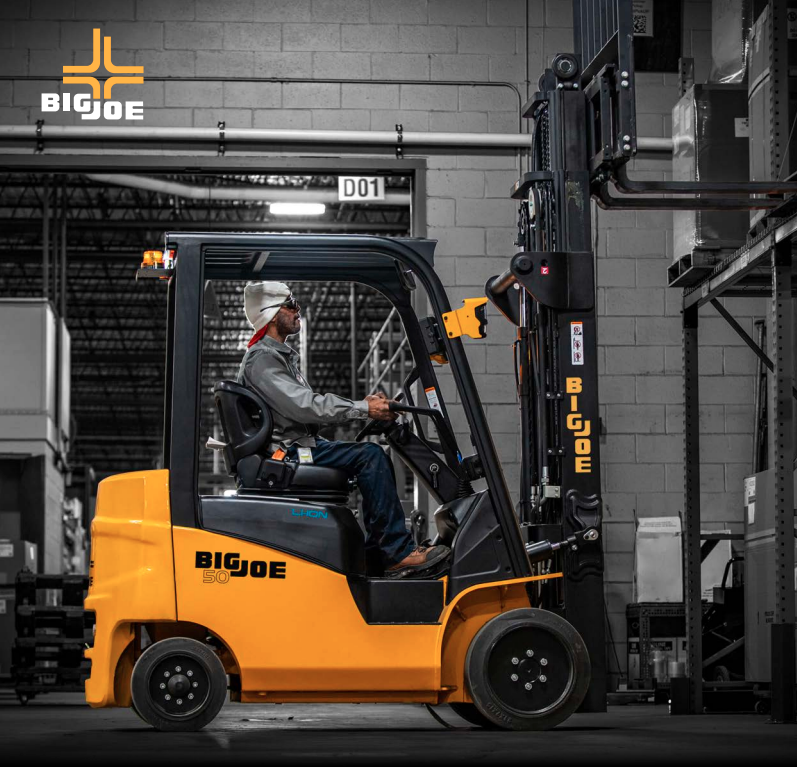
In a facility that runs around the clock, Big Joe integrated lithium-ion forklifts went wheel-to-wheel with traditional internal combustion (IC) trucks to prove that clean, electric power can deliver the same muscle, reliability, and efficiency as internal combustion forklifts.
The findings could reshape how you think about your fleet.
NON-STOP PERFORMANCE 20+ HOURS EACH DAY.
OVERVIEW
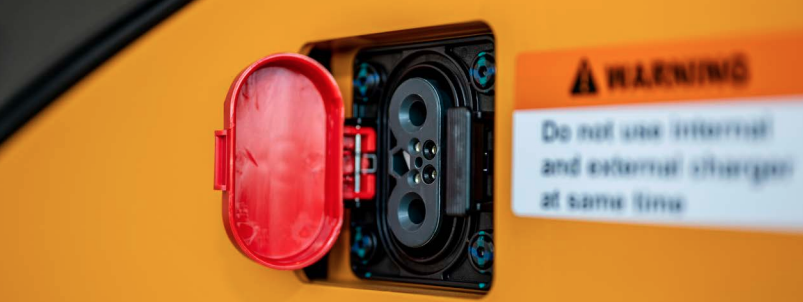
In early 2025, a high-output injection molding facility in Texas took a bold step toward electrification. Operating 24/7, the plant introduced Big Joe integrated lithium-ion electric counterbalance forklifts to test their ability to meet the demands of a continuous, high-hour operation. Each truck was equipped with a 36.8kWh battery and charged using a 12kW external charger.
The goal – prove that these Big Joe lithium-ion forklifts could replace older internal combustion units without impacting their operation negatively.
CHALLENGE
The facility’s material handling needs were intense:
- 20+ hours of daily operation per truck on peak days
- Minimal downtime windows for charging
- A need for cost predictability, emissions reduction and fleet optimization
The question was clear: Could electric trucks not only survive but thrive in this demanding application?
SOLUTION
All Big Joe forklifts are equipped with Pulse – Big Joe’s advanced telemetry system that delivers
comprehensive, real-time tracking to ensure precise, up-to-the-moment visibility into:
- Operational hours
- Battery state of charge (SOC)
- Charging behavior
- Energy consumption
- Service information
This data-driven approach allowed the facility to monitor performance trends and identify
opportunities for operational improvement.
RESULTS: High Utilization – High Reliability
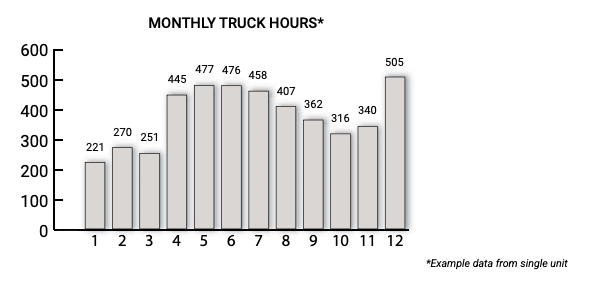
Fleet Operational Hours
- The unit was utilized 4,528 hours in one year
- The unit was in operation an average of 13.2 hours per day, with thirty-seven days reaching a full 20 or more hours of operation
- The unit was used 342 days of the year with 192 consecutive days with at least one hour of use
This level of productivity is typical for IC trucks, but the Big Joe units performed without compromise proving that electric trucks are not only viable, but also well suited for high-hour applications.
BIG JOE TELEMATICS. ELECTRIFY WITH CONFIDENCE.
Truck Operational Hours and Usage
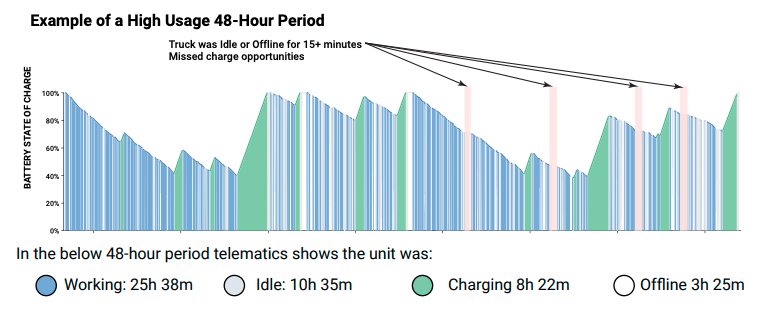
The Big Joe Pulse system was successful in providing key insights on truck utilization, telemetrically. By analyzing the time each unit spends in one of four key states, operation managers gain a better understanding of the utilization patterns. These patterns give a snapshot of how each forklift is used throughout a typical day and can identify missed charging opportunities during idle periods. Additionally, these insights can help in shift planning, precise ROI calculations, emission reduction estimations, reducing downtime and extending the battery life through better charging practices.
The four key states of the forklift are:
| Working: Truck is key-on and actively driving, lifting, lowering or running an attachment | Charging: Truck is key-on or off and actively charging the battery. |
| Idle: Truck is key-on and not actively driving, lifting, lowering or running an attachment. (LPG forklift would be idling in this state) |
Offline: Truck is key-off, parked and powered down. |
REGENERATIVE BRAKING: The Unsung Hero
Big Joe’s integrated lithium-ion battery recharges whenever an operator slows the truck down via regenerative braking. Over the last three months, the forklift averaged one hour of operation a day powered by energy from regenerative braking – essential when every second counts. Lithium’s ability to charge via braking extended run times by 6.1%, a key to unlocking 24/7 applications that other power sources, such as lead acid batteries may have struggled with.
UP TO 1.75 HOURS PER DAY POWERED BY REGENERATIVE BRAKING.
ENERGY USAGE
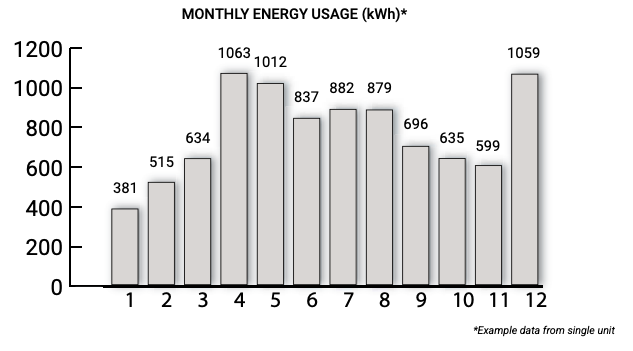
Over a twelve month period the unit used 9,192 kWh.
CHARGING BEHAVIOR
In the final month of the year-long review, the unit delivered more than 500 hours of reliable
performance (16.2 hours per day)
Thanks to consistent charging practices and powerful 12kW fast charging, the operation ran
seamlessly – never once slowed down by a low state of charge.
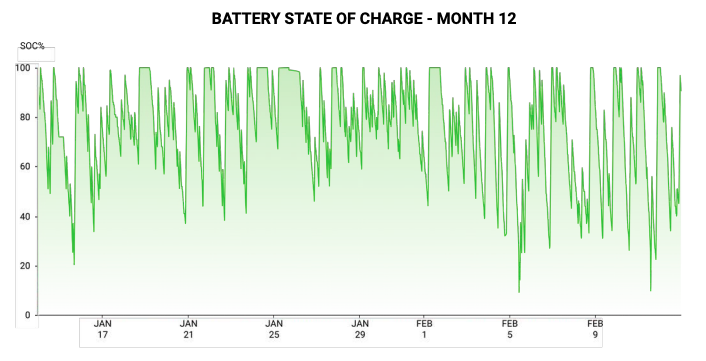
OPPORTUNITY CHARGE: 15 MINUTES = +8% BATTERY SOC.
Faster charging options available
ENERGY EFFICIENCY AND COST SAVINGS
- Total electricity cost: $927 (at $0.1009/kWh)
- Cost per operational hour: $0.204
- Regenerative braking saved 602 kWh, reducing energy costs by $60
Compared to LPG fuel costs, the electric fleet provided significant savings, with predictable and
stable energy prices and no need for fuel delivery logistics.
ONE YEAR OVER $5,200 FUEL SAVINGS TOTAL, $1,300 FUEL SAVINGS FROM IDLING.
Per truck
Fleet Comparison to ICE: Fuel Cost
| Big Joe Lithium-Ion | Working | Idle | Total |
|---|---|---|---|
| Truck Hours | 2,661 | 1,867 | 4,528 |
| Energy Usage | 9,192 | 0 | 9192 |
| Energy Cost ($/kWh) | $.09 | ||
| Energy Spend | $927 | $0 | $927 |
| LPG Truck | Working | Idle | Total |
|---|---|---|---|
| Truck Hours | 2,661 | 1,867 | 4,528 |
| Energy Usage (gal. LPG) | 1,157 | 461 | 2,048 |
| Energy Cost ($/gal.LPG) | $3.00 | ||
| Energy Spend | $4,761 | $1,382 | $6,143 |
ENVIRONMENTAL IMPACT
Zero Exhaust Indoors
Big Joe integrated lithium-ion forklifts produce no local emissions, creating healthier, cleaner
workplaces without indoor exhaust. The only emissions are those from the grid while charging.
Emission Comparison – Electric vs. LPG
- Electric (Texas average*): 0.768 lb. CO2e per kWh
- LPG: 12.676 lb. Co2e per gallon burned
Impact Example
Over six months of operation, each Big Joe integrated lithium-ion forklift reduced emissions by
11,000 lb. of CO2e compared to LPG – the equivalent of removing 2.2 passenger cars from the road.
Interested in finding out more about Big Joe Lithium-Ion forklifts?
Contact your ACT associate today!
